
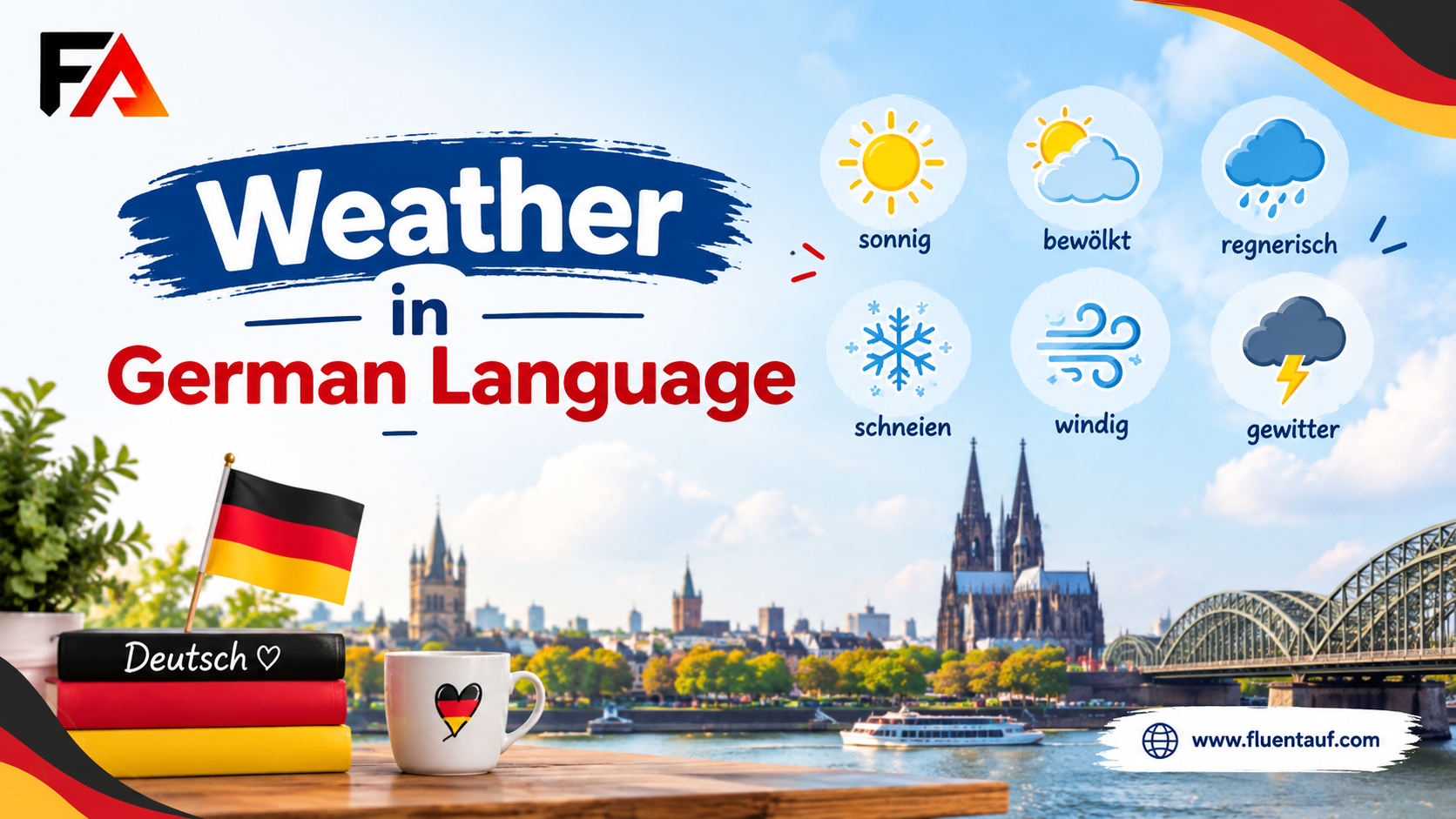
Learning how to talk about the weather is one of the easiest and most practical skills you can learn to enhance your everyday German. If you are visiting, studying, taking a German test, or even just chatting with someone who speaks German, knowledge of some basic weather phrases will surely help.
This article is all about basic weather in german, weather vocabulary and phrases, and an overview of the weather in Germany.
How to Say Weather in German
At the A1 level, focus on short and simple sentences. You do not need complicated grammar to talk about the weather.
The word for weather in German is das Wetter.
If you would like to ask "How is the weather?" you can use:
Wie ist das Wetter?
Translation: How is the weather?
You may also ask:
Wie ist das Wetter heute?
Translation: How is the weather today?
Wetter is a neuter noun, which is why it needs the article das.
Common Weather Vocabulary in German
Learning basic weather vocabulary in german makes it easier to describe different conditions.
| English | German |
|---|---|
| Weather | das Wetter |
| Sun | die Sonne |
| Sunny | sonnig |
| Rain | der Regen |
| Rainy | regnerisch |
| Cloud | die Wolke |
| Cloudy | bewölkt |
| Wind | der Wind |
| Windy | windig |
| Snow | der Schnee |
| Snowy | verschneit |
| Storm | der Sturm |
| Stormy | stürmisch |
| Fog | der Nebel |
| Foggy | neblig |
| Temperature | die Temperatur |
| Hot | heiß |
| Warm | warm |
| Cold | kalt |
| Cool | kühl |
| Ice | das Eis |
| Thunder | der Donner |
| Lightning | der Blitz |
These weather words in german are useful for everyday conversations and can also appear in beginner-level German learning materials.
Useful German Sentences Related To The Weather
Once you have learned individual words, it is time to learn full sentences.
It is sunny.
Die Sonne scheint.
The sun is shining.
This can also be said:
Es ist sonnig.
It is sunny.
It is raining.
Es regnet.
It is snowing.
Es schneit.
It is cold.
Es ist kalt.
It is very hot.
Es ist sehr heiß.
It is cloudy.
Es ist bewölkt.
It is windy.
Es ist windig.
The weather is beautiful.
Das Wetter ist schön.
The weather is bad.
Das Wetter ist schlecht.
What will the weather be like tomorrow?
Wie wird das Wetter morgen?
These basic sentences are great for starters who want to talk about weather in german.
Talking About Temperature in German
Temperature is yet another crucial element to be discussed in terms of the weather.
Some useful phrases include:
- Es sind 25 Grad. — It is 25 degrees.
- Es ist 10 Grad kalt. — It is 10 degrees cold.
- Die Temperatur beträgt 20 Grad. — The temperature is 20 degrees.
- Heute ist es ziemlich warm. — Today it is quite warm.
- Heute ist es sehr kalt. — Today it is very cold.
It is important to remember the following phrase:
Wie viel Grad sind es heute?
It means "How many degrees is it today?"
Germany has four different seasons, and the weather may change a lot in a year. It will be helpful to know the 4 seasons in Germany for traveling, learning, working, or just having fun outdoors.
Weather in Germany Through the Year
The climate in Germany varies from region to region, therefore the climatic conditions may differ. The coast, western Germany, southern Germany, and the mountainous areas may all have varying conditions.
Weather in Germany in January
January is among the coldest months in Germany. The weather is quite cold in January with temperatures falling below 0°C, particularly at night. It also experiences weather like snowing, frost, rain, and cloudy skies. South Germany and mountainous regions get heavy snowfalls.
Weather in Germany in February
The month of February is still cold with gradually increasing temperatures. Snow and rain may occur in Germany while northern and central regions receive chilly winds. Wearing warm clothing is highly recommended.
Weather in Germany in March
March is the month when spring starts in Germany; however, the weather is unpredictable and varies from sunny days to snowy and rainy days. Temperatures also increase gradually in March.
Weather in Germany in April
April is a month of variable weather conditions. You might experience sunshine, rainfall, winds, and colder weather conditions all in a single day. As the days pass in spring, temperatures get warmer and flowers start blooming.
Weather in Germany in May
Germany has a pleasant and mild weather condition in May. This is an ideal time for sunny weather and warmer conditions in Germany. It rains at times, therefore, having a light coat with you might come in handy.
Weather in Germany in June
The month of June marks the beginning of summer season in Germany. The weather is normally warm with long hours of daylight and comfortable temperatures. At times there may be rain showers and thunderstorms.
Weather in Germany in July
July is often the warmest month in Germany. Temperatures can soar up to the mid-twenties degrees centigrade especially during warm spells. There is plenty of sunshine, but at times rain and thunderstorms can take place.
Weather in Germany in August
The average temperatures in August range from 20 to 30 degrees centigrade depending on the weather conditions. This is a warm and nice month which is favourable for holidays and activities outdoors. There can be rainy and thunderstorm weather.
Weather in Germany in September
This month is characterized by the change of the seasons when autumn starts replacing the warm and hot summer weather. The first half of the month remains warm but the second part of the month becomes progressively cooler and the days become shorter.
Weather in Germany in October
This is the autumn weather in Germany and the temperatures are lower as compared to September. It rains and is cloudy often and the beauty of the changing autumn colours make Germany look pretty.
Weather in Germany in November
November is a cool and cloudy month that is becoming chilly day by day. It rains often in Germany in November and the temperature is decreasing especially during morning and evening hours. Some snow falls in higher regions of Germany.
Weather in Germany in December
The weather in germany in december is generally cold, with shorter days and winter conditions. Snow is possible, particularly in southern and mountainous areas, although snowfall varies from place to place.
December is also famous for Germany's Christmas markets, making it an attractive month for visitors despite the cold weather.
Useful Weather Questions in German
Here are some useful questions to practice for your daily life:
Wie ist das Wetter?
How is the weather?
Wie ist das Wetter heute?
How is the weather today?
Regnet es heute?
Is it raining today?
Schneit es?
Is it snowing?
Ist es heute kalt?
Is it cold today?
Scheint die Sonne?
Is the sun shining?
Wie warm ist es heute?
How warm is it today?
Wie wird das Wetter morgen?
What will the weather be like tomorrow?
At german A2 level , students can make the conversation longer by discussing tomorrow's weather, seasons, temperatures, and weekend plans.
Conclusion
Weather comprehension is an integral aspect of daily communication when studying German. Simple terms like Sonne, Regen, Schnee, Wind, along with practical questions like „Wie ist das Wetter heute?“ will surely make your conversations in German a lot more proficient.
Fluent AUF is your one-stop shop when it comes to building a solid base in German and moving on to advanced stages. Regular practice and good vocabulary will give you confidence when speaking German on a day-to-day basis.
FAQ's
How do I say "cold" in German?
The translation for “cold” in German is “kalt”. For instance, “Es ist kalt” translates to “It is cold”.
How do you ask about the weather in German?
One could say “Wie ist das Wetter?”, translating to “How is the weather?”. Another phrase for asking about the weather could be “Wie ist das Wetter heute?” which translates to “How is the weather today?”
How do you say bad weather professionally?
To use a more professional approach to describing bad weather, one could say “schlechtes Wetter” or “bad weather”. One could also use the phrase “ungünstige Wetterbedingungen”, which means “unfavorable weather conditions”. For example, “Aufgrund der ungünstigen Wetterbedingungen wurde die Veranstaltung verschoben.” means “Due to unfavorable weather conditions, the event was postponed.”
What are the different types of weather in Germany?
Germany experiences a variety of weather throughout the year because of its changing seasons and regional climate. The main types of weather include:</h2><h3>1. Sunny weather – sonniges Wetter</h3><h3>2. Rainy weather – regnerisches Wetter</h3><h3>3. Cloudy weather – bewölktes Wetter</h3><h3>4. Snowy weather – verschneites Wetter</h3><h3>5. Windy weather – windiges Wetter</h3><h3>6. Foggy weather – nebliges Wetter</h3><h3>7. Stormy weather – stürmisches Wetter</h3><h3>8. Partly cloudy – teilweise bewölkt</h3><h3>9. Cold weather – kaltes Wetter</h3><h3>10. Hot weather – heißes Wetter
How do you say "what is the weather?" in German?
You say "What is the weather?" in German as "Wie ist das Wetter?"