
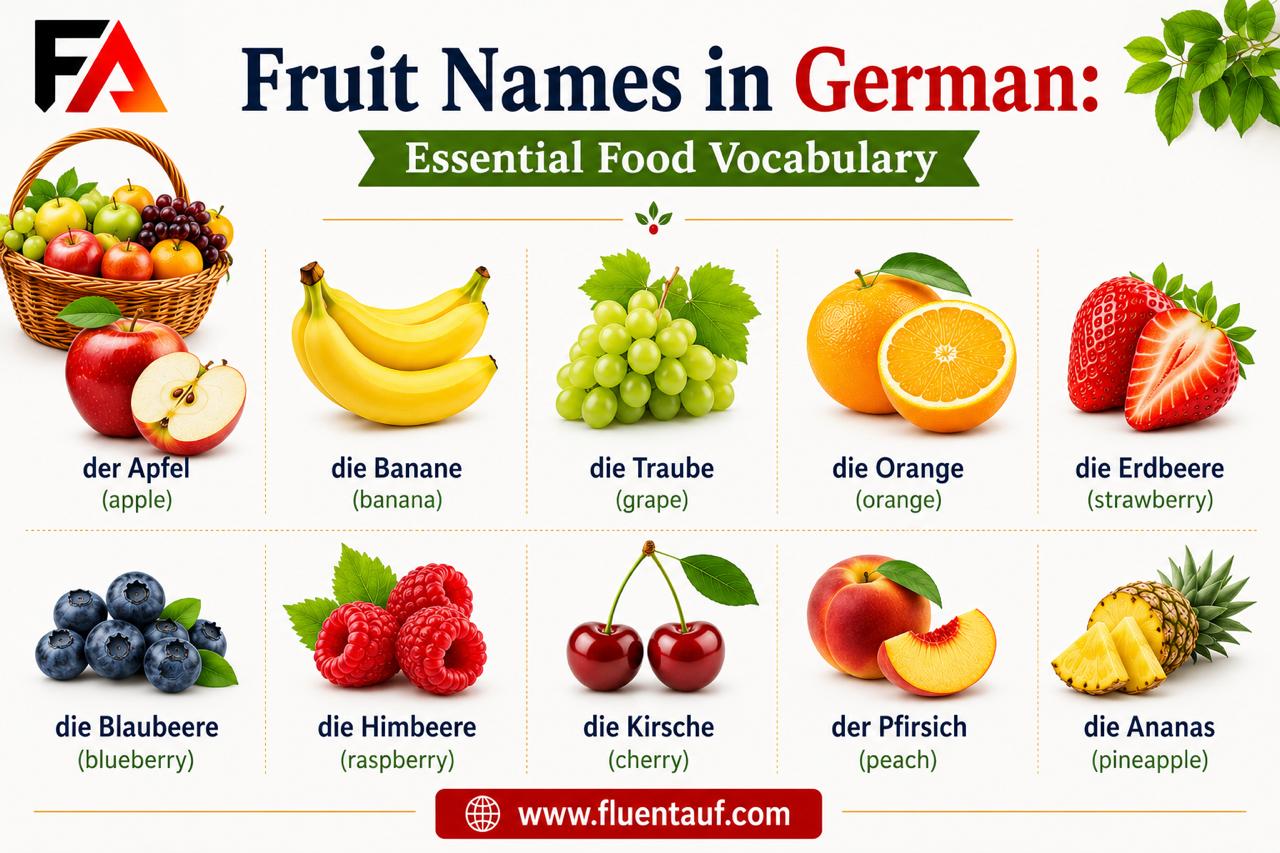
Studying food vocabulary is one of the best ways to learn German language. No matter where you are going to go, be it a local market or cafe where you want to order a fresh juice, knowledge of German fruit names will come in handy for you in any case.
In this guide, you'll learn 10 fruits in German along with their English meanings.Here we will study the most common names of fruits in German, their meanings in English and example sentences to learn them easier.
Why Should You Learn Fruit Names in German Language?
Learning fruit vocabulary is useful because:
- It makes shopping easier.
- You can comprehend a menu and recipes.
- It helps you to have better everyday German conversation.
- It is helpful to take German language exams.
- It gives you more confidence in real life situations.
Since fruits are a part of everyday life, it is one of the first vocabulary sections every German learner should learn.
Common Fruit Names in German
| English | German | Article |
|---|---|---|
| Apple | Apfel | der |
| Banana | Banane | die |
| Orange | Orange | die |
| Grapes | Trauben | die (plural) |
| Strawberry | Erdbeere | die |
| Cherry | Kirsche | die |
| Pear | Birne | die |
| Peach | Pfirsich | der |
| Plum | Pflaume | die |
| Lemon | Zitrone | die |
| Lime | Limette | die |
| Watermelon | Wassermelone | die |
| Melon | Melone | die |
| Pineapple | Ananas | die |
| Mango | Mango | die |
| Kiwi | Kiwi | die |
| Blueberry | Heidelbeere | die |
5 Fruits in German for Beginners
If you're short on time, start by learning these 5 fruits in German that are commonly used in everyday conversations.
- der Apfel – Apple
- die Banane – Banana
- die Orange – Orange
- die Erdbeere – Strawberry
- die Birne – Pear
These five words frequently appear in grocery shopping, restaurants, and beginner-level German conversations.
Citrus Fruits in German
Citrus fruits are common in German households and are useful vocabulary for beginners.
| English | German |
|---|---|
| Orange | Orange |
| Lemon | Zitrone |
| Lime | Limette |
| Grapefruit | Grapefruit |
| Mandarin | Mandarine |
Example Sentences
- Ich esse gern Orangen. (I like eating oranges.)
- Die Zitronen sind frisch. (The lemons are fresh.)
- Wir kaufen Mandarinen im Supermarkt. (We buy mandarins at the supermarket.)
Berries in German
Berries are popular in desserts, smoothies, and breakfast dishes.
| English | German |
|---|---|
| Strawberry | Erdbeere |
| Blueberry | Heidelbeere |
| Raspberry | Himbeere |
| Blackberry | Brombeere |
| Cranberry | Moosbeere |
Example Sentences
- Ich mag Erdbeeren sehr. (I like strawberries very much.)
- Heidelbeeren sind gesund. (Blueberries are healthy.)
- Himbeeren schmecken süß. (Raspberries taste sweet.)
Other Popular Fruits in German translation
| English | German |
|---|---|
| Apple | Apfel |
| Banana | Banane |
| Mango | Mango |
| Pineapple | Ananas |
| Kiwi | Kiwi |
| Watermelon | Wassermelone |
| Coconut | Kokosnuss |
German Phrases Useful for Talking About Fruits
The following is a list of useful sentences that can be used when buying or talking about fruits:
Ich möchte frisches Obst kaufen. — I would like to buy fresh fruit.
Welches Obst mögen Sie? — Which fruit do you like?
Die Äpfel sind sehr frisch. — The apples are very fresh.
Ich brauche Bananen und Orangen. — I need bananas and oranges.
Wir essen Obst jeden Tag. — We eat fruit every day.
Mangos sind reich an Vitaminen. — Mangoes are rich in vitamins.
Learn More German Vocabulary Words Quicker
It is important that you start with learning some fruits names, but taking vocabulary lessons will help you learn German vocabulary quicker.
German A1 Level: For Beginners! is an amazing course for you if you have just started studying German language. In addition, German B1 Level is perfect for those who already know some German vocabulary and need to improve their speaking, listening, and reading skills
Incorporating vocabulary topics into your studies will be useful.
Tips on Learning Vocabulary for Fruit Names
Vocabulary becomes easy to learn through regular practice.
- Practice with flashcards.
- Write the name of each fruit in German on your fridge.
- Watch videos on German cuisine and fruit buying.
- Learn German recipes.
- Use fruit names while having everyday conversations.
- Regularly revise the vocabulary learned.
In addition to learning Fruits in German, you can also learn Vegetables in German to increase your general knowledge about foods in daily life. The reason for this is that fruits and vegetables are frequently used in discussions related to shopping, cooking, and eating in German-speaking environments.
Typical Mistakes Made by Beginner German Learners
While learning the names of fruits in German, beginners tend to:
- Forget the articles (der, die, das) associated with different fruits.
- Mix up singular and plural forms of the words.
- Mispronounce umlauts of words like Äpfel.
- Directly translate the English expressions into German.
Conclusion
Memorizing the names of different fruits in German can be a great way to enhance your vocabulary and speak German in practical scenarios. Whether you want to shop in German or just order food, it will be very helpful for you to learn common names of fruits.
Fluent AUF provides courses on various levels of German language for anyone who wants to have strong knowledge of the language. Start from A1! to get fundamental knowledge of vocabulary and grammar; German B1 Level to develop listening and speaking abilities; and German C1 Level: Advance Level German for reaching the advanced level.
FAQ's
What is the German word for fruit?
the German word for fruit is Obst.
What is apple called in German?
Apple is called Apfel.
What is banana in German?
Banana is Banane.
How can I learn German fruit vocabulary quickly?
Practice every day using flashcards, German recipes, shopping conversations, and simple speaking exercises.